Paintings from The Johnson Collection Featured in Ken Burns’s “The American Revolution” Documentary
Media Contact

Sarah Tignor, Director [email protected] 864.594.5834
Ken Burns's "The American Revolution" Docuseries
Two paintings from The Johnson Collection (TJC) are featured in The American Revolution, the six-part, twelve-hour documentary from acclaimed filmmaker Ken Burns and co-directors Sarah Botstein and David Schmidt. Premiering on PBS in November 2025, the documentary examines the Revolutionary War and the founding of the United States through the experiences of people from a wide range of backgrounds, while exploring the conflict’s enduring impact on the nation and the world.
Image Gallery
The Paintings
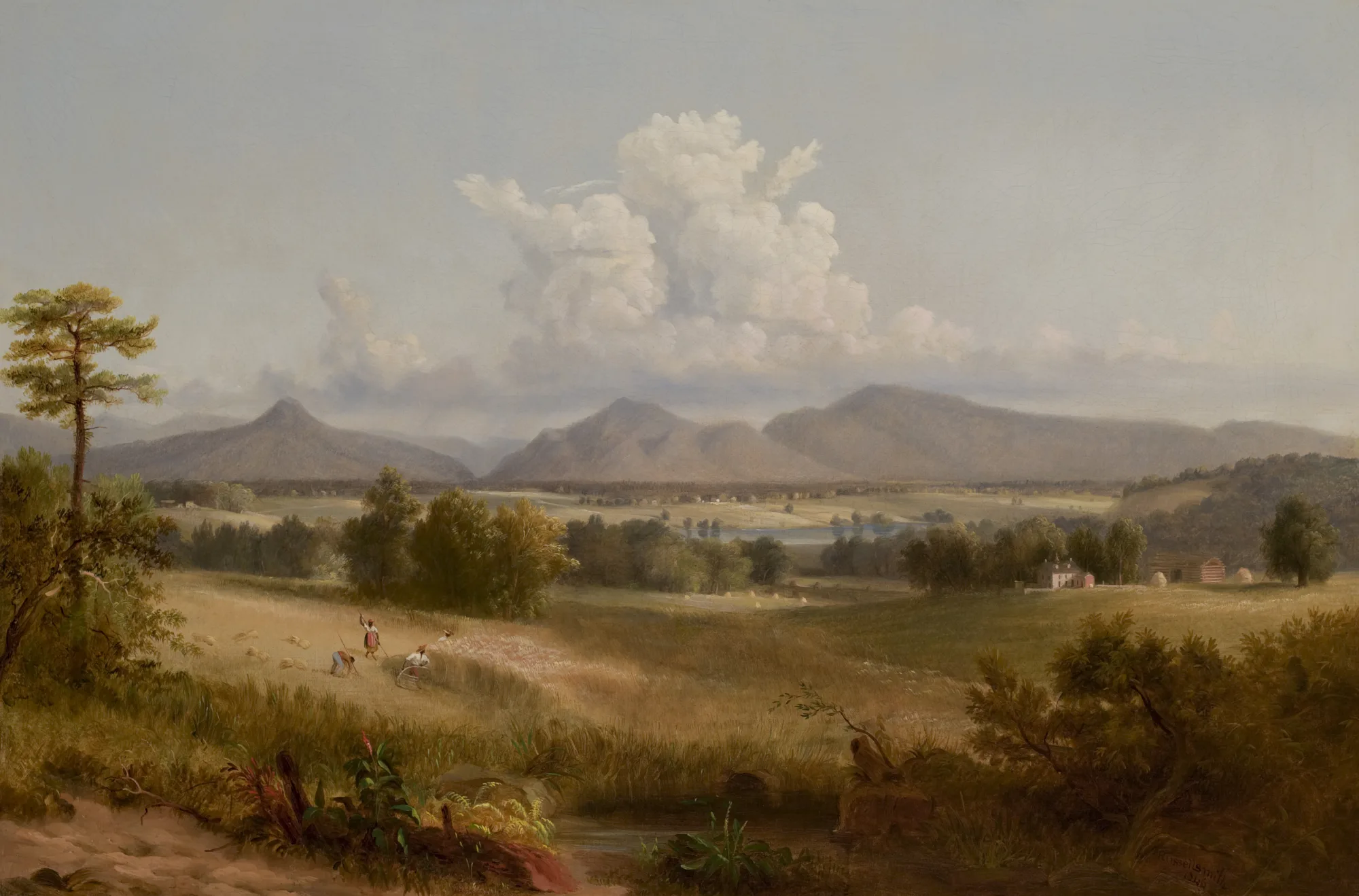
The two works—Andrew Melrose’s Morning on the French Broad NC (Old Blockhouse) (1880) and Russell Smith’s View in the Great Valley of Va. showing the Blue Ridge at Brown’s Gap, the hill above Wyer’s Cave, and the South Fork of the Shenandoah River (1846)—help bring the documentary’s historical narrative to life through the landscapes of the American South.
Both works appear in Episode 6, The Most Sacred Thing, which follows the Revolution from May 1780 through the years following victory at Yorktown. In Melrose’s Morning on the French Broad NC (Old Blockhouse) depicts a landscape in western North Carolina and is one of three documented scenes the Scottish-born artist created following an excursion through Georgia and the Carolinas in 1880. In the documentary, the camera moves into the painting’s depiction of the historic structure as the narrator discusses post-Revolutionary border disputes and the efforts of some North Carolinians to establish a new state.
Smith’s View in the Great Valley of Va., painted in 1846, presents the expansive Shenandoah Valley and Blue Ridge Mountains. In The American Revolution, the painting accompanies the story of a young girl and her family fleeing their home and seeking refuge in the Virginia countryside during the war.
The inclusion of these paintings reflects The Johnson Collection’s commitment to making art of the American South available beyond traditional museum settings and to contributing Southern perspectives to broader narratives of American history.