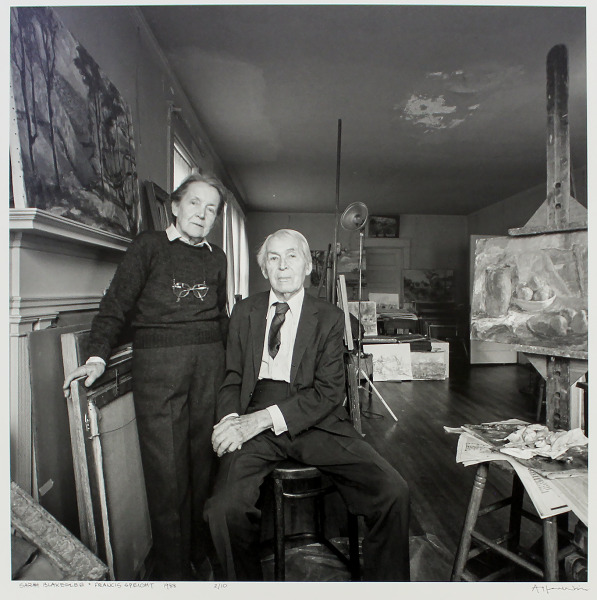
Photograph Portrait of Sarah Blakeslee and Francis Speight
Allen Weiss
Born 1955
The variety and extent of Allen Mark Weiss's creative output has been impressive and demonstrates his versatility and talent. He began as a black and white photographer; after many successful years doing other projects in color, including films and commercials, he returned to his roots.
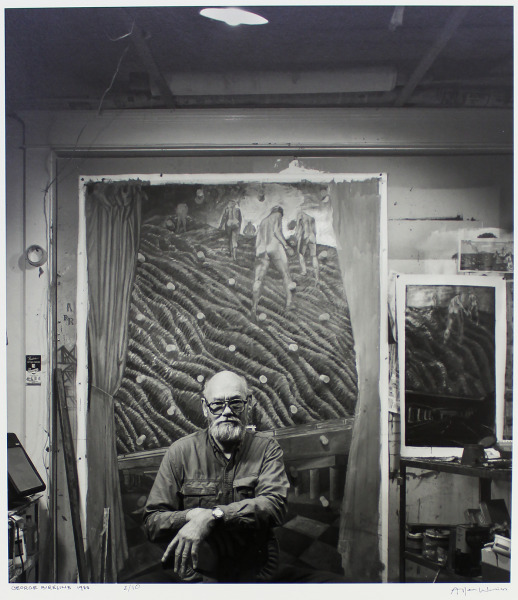
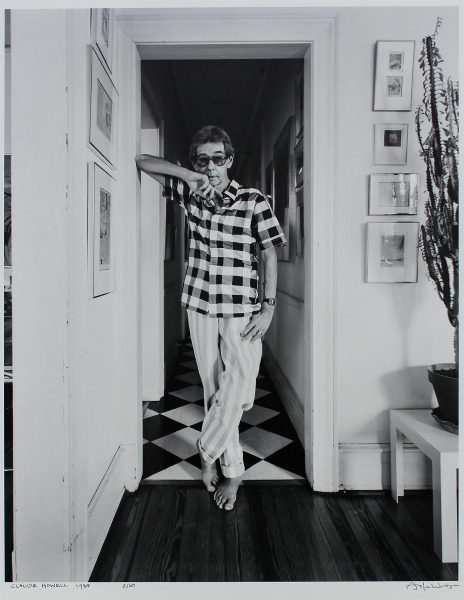
Weiss was born in the Catskills in upstate New York, the location of many mountain resorts popular with Jewish families. He was raised in North Carolina and began his career in Raleigh. In New York he studied and worked with Arnold Newman, a highly regarded portrait photographer known for his "environmental" approach—in other words placing sitters in the context of their work. Similarly, in 1988 Weiss did a series of black and white portraits of North Carolina artists posed in their work spaces with representative pieces. Among the eleven selected were Maud Gatewood, Edith London, Claude Howell, George Bireline, Francis Speight, and Sarah Blakeslee (whom he portrayed both solo and with Speight), Herb Jackson, Ted Potter, Joe Cox, Harvey Littlejohn, and Robert Irwin.
In the 1990s, Weiss branched out to direct short films, commercials, and public service announcements (PSAs). He collaborated with a number of production companies, including Bedford Falls, Shelter Films, the Shooting Gallery, and Milly Films in Belgium. Working with a variety of agencies, he directed commercials for Lands' End, Shell, Banana Republic, and Miller Beer, among others. He oversaw PSAs for such causes as the North Carolina Symphony, AIDS, and the North Carolina Holocaust Memorial. The Holocaust Memorial was especially significant as his father, Harry, was a Holocaust Survivor. His own work references this; one such piece, titled Number 89444, is the same number his father received as a tattoo when he was transferred from the main Dachau concentration camp to a subcamp in Landesberg, locations which are now known for their horrific conditions.
After a while, he became somewhat cynical about commercial work, saying: "Ad folk who think their work will change the world as we know it, and directors who throw hissies on set, need a serious look inward. We're selling shoes here, ladies and gentlemen. If you want to create art [sic] be an artist. Advertising is artistic commerce at its best." Weiss followed his own advice, returning both to Raleigh and to still photography. He realized that in the interim there were several technical improvements over what he had produced two decades before: "Simply put, I'm seeing details in these prints that I never imagined could be pulled from negatives."
Allen Weiss
Allen Weiss

Allen Weiss
Allen Weiss

Allen Weiss

Allen Weiss