
Untitled
Helen DuPré Moseley
1887-1984
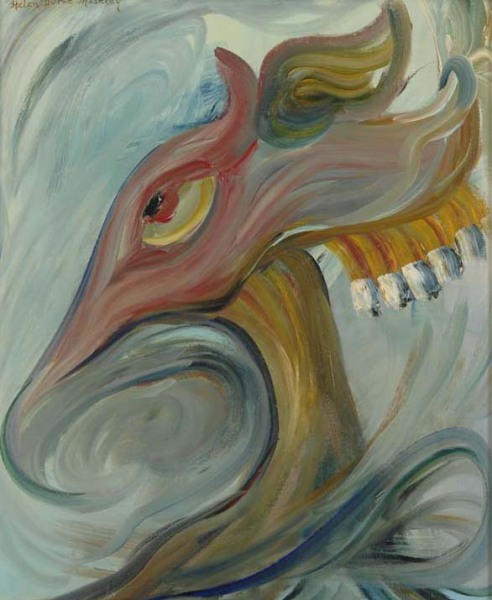
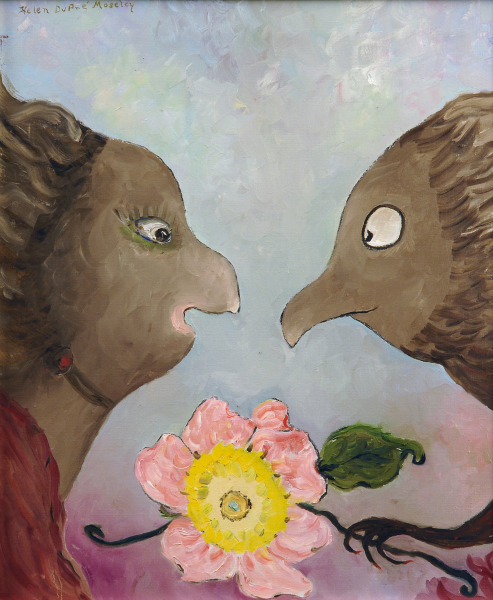
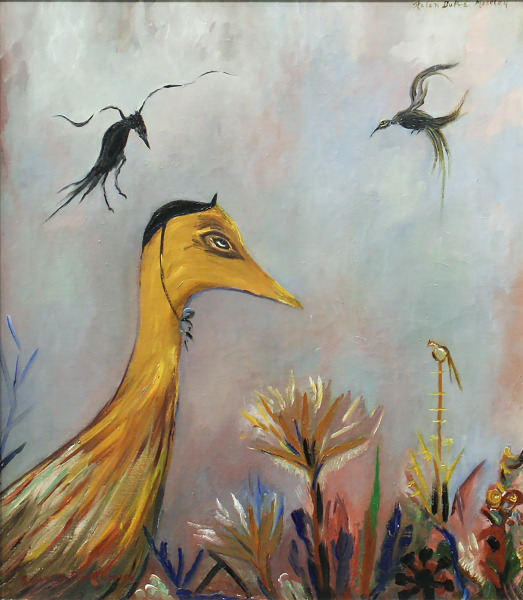
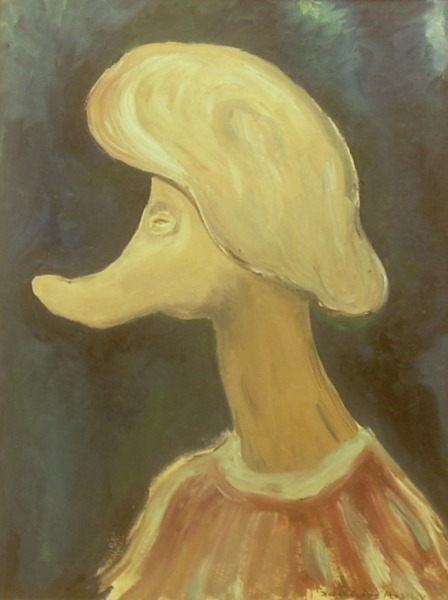
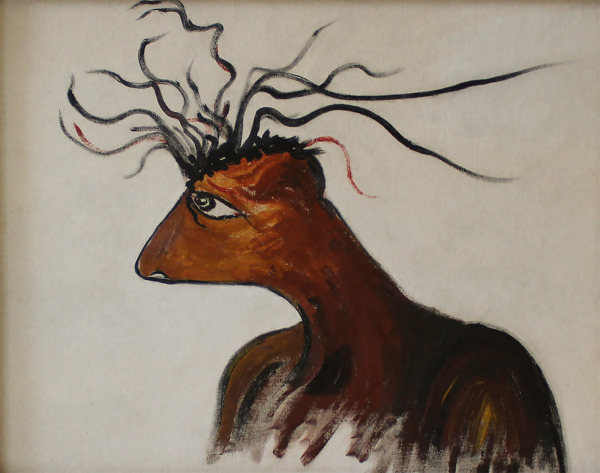
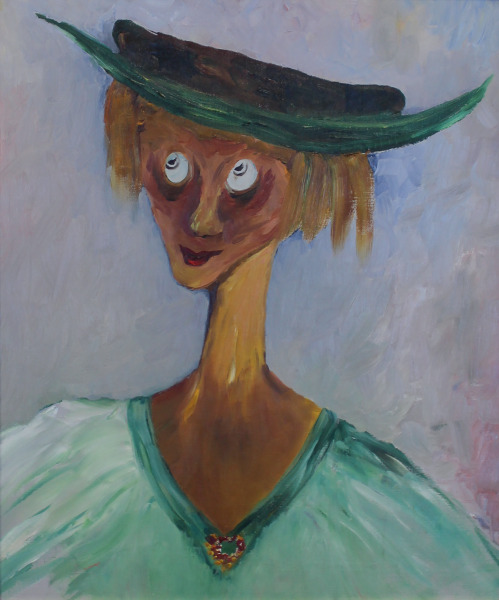
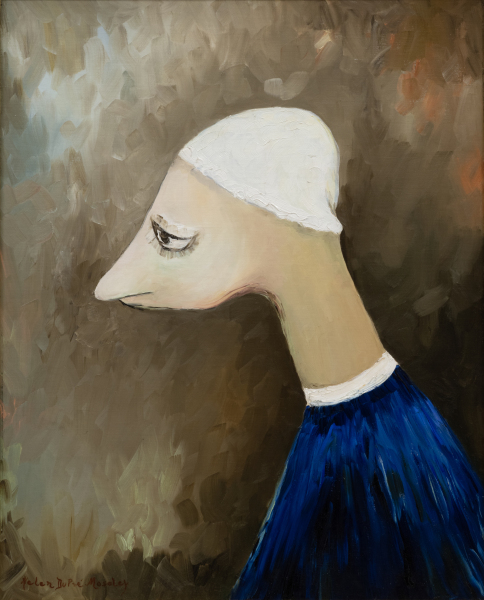
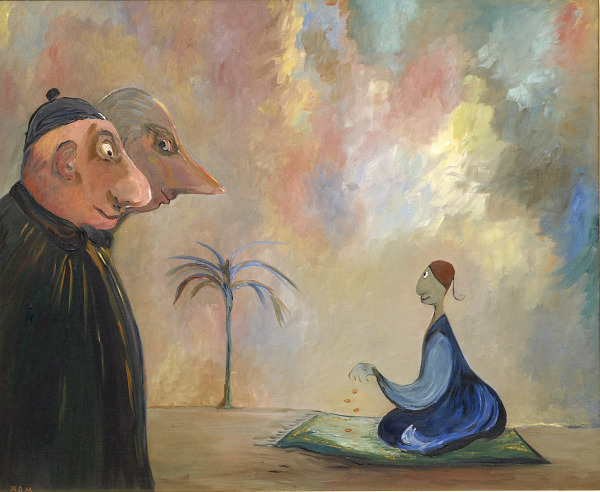
Just as her life defied many conventions of the day, Helen DuPré Moseley's art is wholly original and difficult to categorize. Self-taught, she discovered her passion for drawing and painting late in life, when she was about sixty. Deriving inspiration largely from her own imagination, she once declared: "I paint what I feel, and I feel this," referring to her untitled depictions of what she called "creatures."
Moseley was born on the campus of Wofford College in Spartanburg, South Carolina, where her father was a professor of physics and geology. In 1907 she received her bachelor's degree from Converse College (now Converse University), located about a mile from her birthplace. She studied a variety of subjects, including theater and went on to receive her master's degree in history two years later. The subject of her thesis was: "The Effect of the French Revolution on Religion in France," reflecting her keen interest in her Huguenot heritage. Following her marriage in 1913, she lived in Laurens, South Carolina, for five years, before returning to Spartanburg. When her husband died in 1927 she took up residence back at Wofford and ran his insurance business.
In 1934 Moseley was appointed by President Franklin D. Roosevelt to become Spartanburg's first female postmaster. She remained in that position until 1956 and upon her retirement Governor James Byrnes commended her: "No doubt the men in the post office… had misgivings as to the attitude of the new Postmaster. … They gave her a chance and those men soon learned what her personal friends knew: she was a very wise woman." In connection with her job, Moseley was active with the Chamber of Commerce, the Business and Professional Women's Club, and the Stamp Club. In addition, she was a trustee of her alma mater, Converse College, 1945–1955, and she supported several charitable organizations such as the Crippled Children's Association and the county Tuberculosis Association.
Before she retired from the post office Moseley took up art; using black watercolor she created whimsical line drawings of animals with human characteristics. This was around 1947, as she exhibited drawings at the Mint Museum in Charlotte, North Carolina that year. She explained: "I think everyone should have a hobby. It relieves tension and takes your mind off your work and the every-day-of-the-week problems. A hobby does the same thing for you mentally as a good workout does for you physically." Related to her art was another hobby: scrapbooking. She was fond of clipping cartoons from The New Yorker and photographs of animals and people of different cultures from the National Geographic Magazine in order to assemble her "FACES" scrapbook. These provided visual inspiration for her work.
In 1949 Moseley transitioned to oils, allowing for more ambitious and colorful compositions often populated by her signature "creatures"—bizarre hybrid figures that combine animal forms with human qualities. In her role as postmaster, she had plenty of opportunity to observe people and their foibles, which she was inclined to satirize, especially figures of authority. She never gave any of her pieces titles, preferring to let viewers form their own interpretations. "Art may depict objects we see, emotions we feel, historical events, or things we imagine," Moseley wrote. "To some an imaginary world is very real; to some it is absurd or irrational." Because she was self-taught, she grappled unsuccessfully with correct perspective and typically positioned her "creatures" either frontally or in profile without any foreshortening. Baffled, critics and other observers attempted to explain the work, with some individuals aligning her paintings with the surreal style of Salvador Dalí and Hieronymus Bosch.
Moseley traveled frequently to New York where she visited the Museum of Modern Art and her sister Grace DuPré, also an artist, who painted over two hundred rather conventional portraits. She went abroad twice, visiting museums and historic sites. Back home in Spartanburg, she was an active member of the garden club and in 1957 along with Irma Cook, Mary Ellen Suitt, Lois Cantrell, and Hazel Bobo, Moseley co-founded the Spartanburg Artists' Guild. In 1964 she received the distinguished alumna award from her alma mater, Converse College.
Helen DuPré Moseley
Helen DuPré Moseley
Helen DuPré Moseley
Helen DuPré Moseley
Helen DuPré Moseley
Helen DuPré Moseley
Helen DuPré Moseley
Helen DuPré Moseley
Helen DuPré Moseley
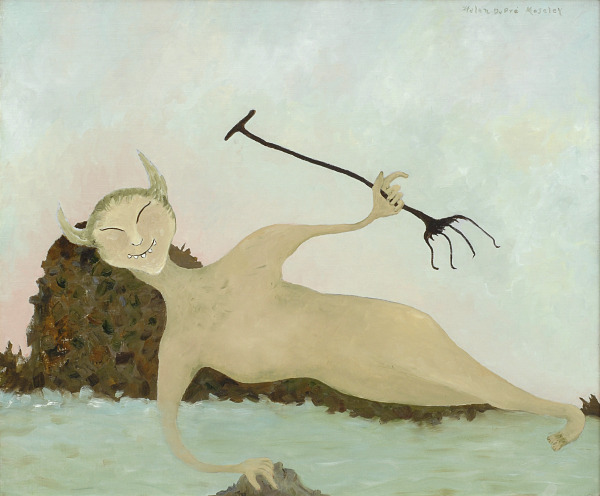
Helen DuPré Moseley
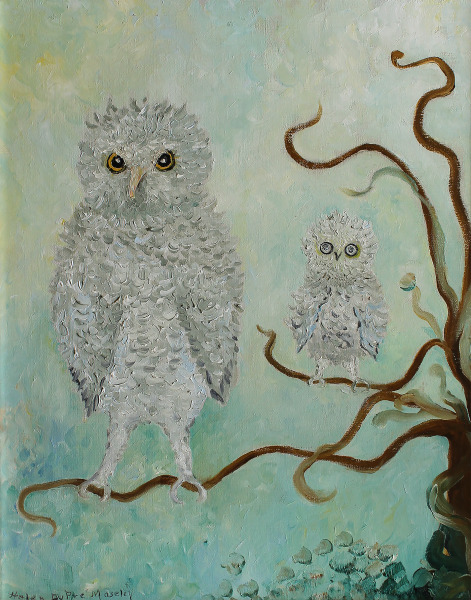
Helen DuPré Moseley
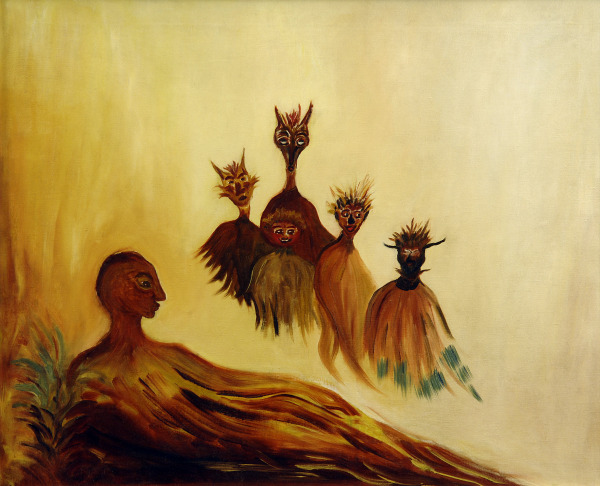
Helen DuPré Moseley
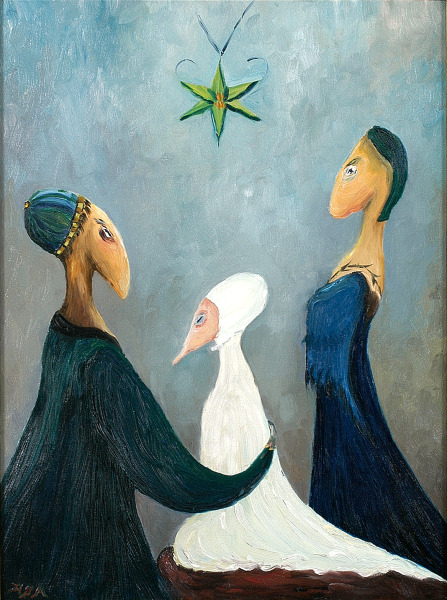
Helen DuPré Moseley
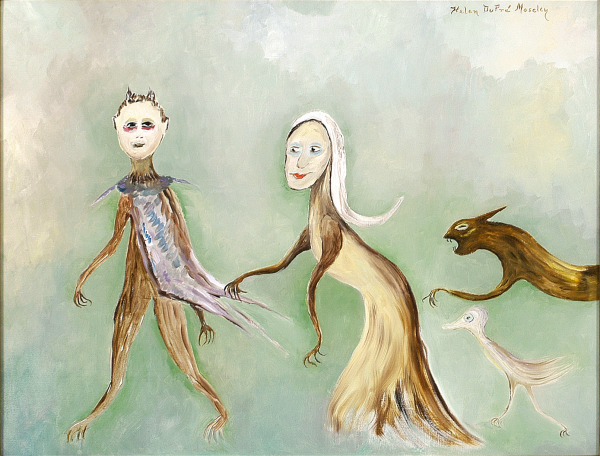
Helen DuPré Moseley
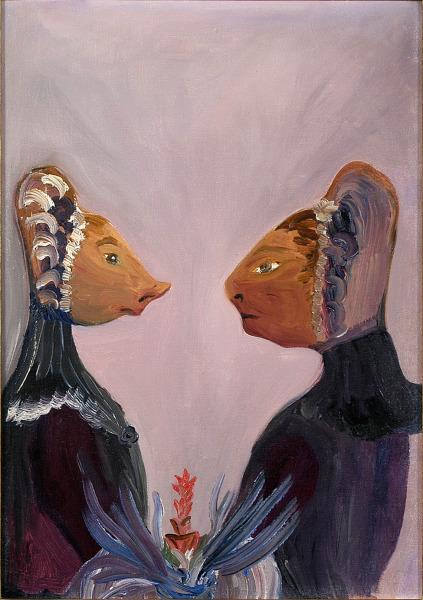
Helen DuPré Moseley
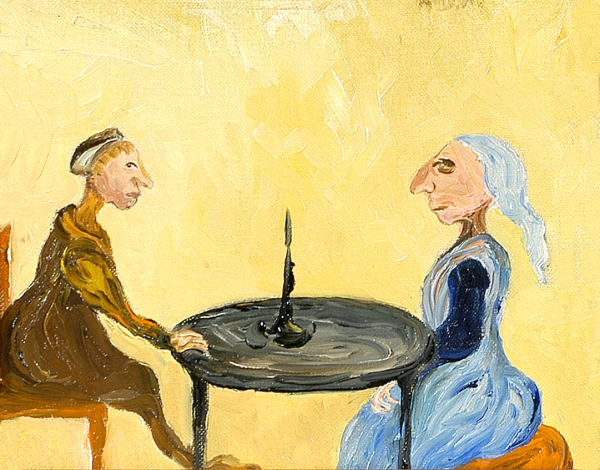
Helen DuPré Moseley
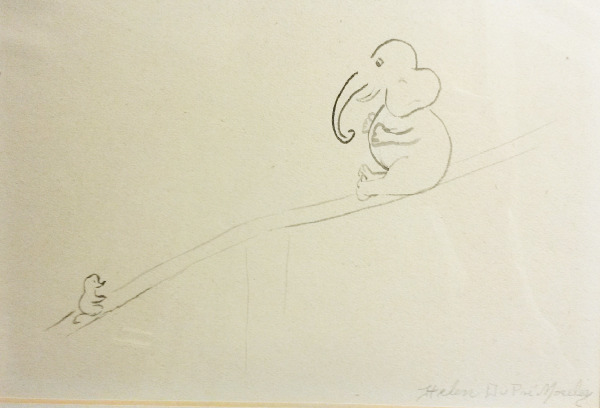
Helen DuPré Moseley