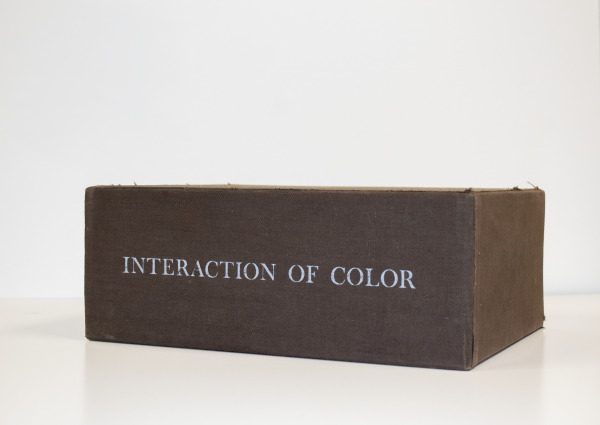
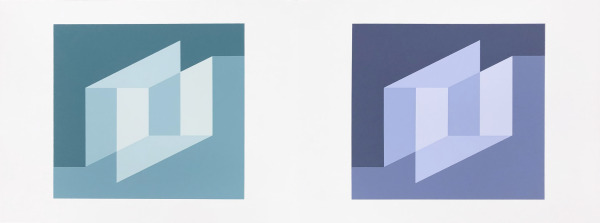
Interaction of Color
Josef Albers
1888-1976

color screen print on paper
15 in x 40 in
1972
Josef Albers grew up in Germany around the turn of the century. His first life-changing encounter with art was in 1908, when he saw paintings by French Impressionist Paul Cézanne. Albers’s eventual great success at the Bauhaus design school made him and his wife Anni celebrities when they were recruited to North Carolina in 1929. With the rise of the Nazi party, the Alberses helped open Black Mountain College and recruit other European exiles into the school’s faculty. Josef’s color and drawing demonstrations became his greatest teaching tool, and he soon amassed a large following of students who found their lives changed by his lessons on essential Bauhaus concepts.
Josef also organized summer programs that drew in a multitude of creatives with diverse experiences and careers. This cemented BMC’s reputation as a laboratory for progressive art practice and cultural exchange. In fact, some of his most famous works were influenced by his musings on the architecture of Mexico, a popular region for artists to visit during and post-WWII. Though Josef and Anni left for Yale in 1947, their legacy remained a strong influence until BMC closed in 1957.
Art in Exchange: North Carolina Artworks in The Johnson Collection, Steven D. Bell Hall, UNC, Chapel Hill, NC, August 1, 2025–Ongoing
Josef Albers
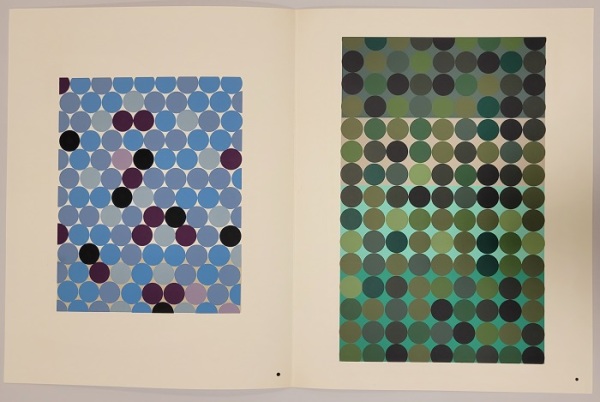
Josef Albers

Josef Albers
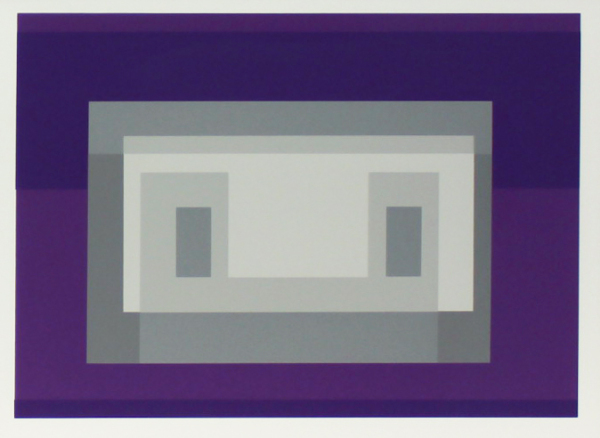
Josef Albers
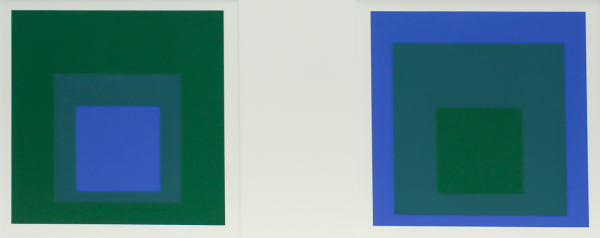
Josef Albers
Josef Albers