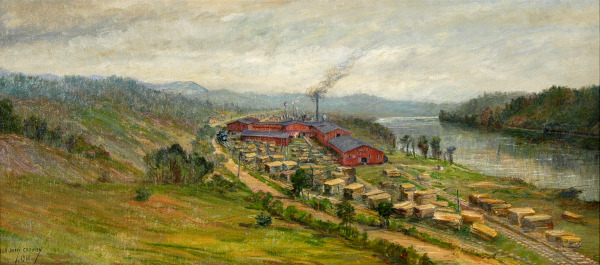
Morgan Manufacturing Company, Woodfin, North Carolina
Ida Crawley
1867-1946
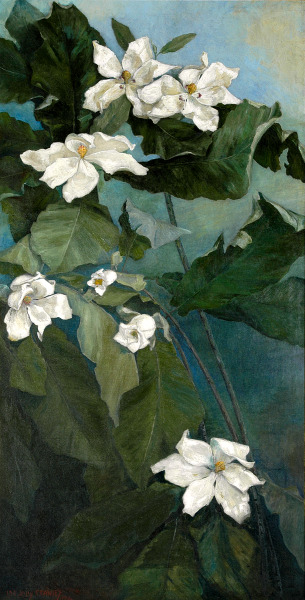
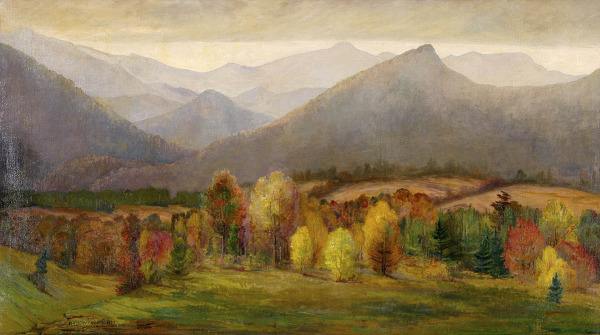
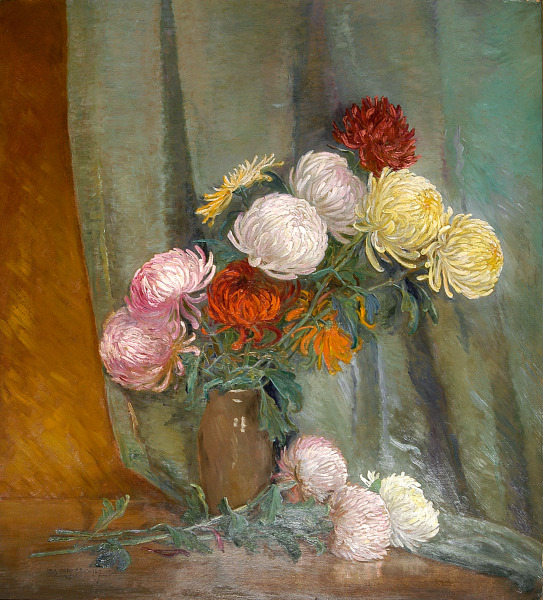
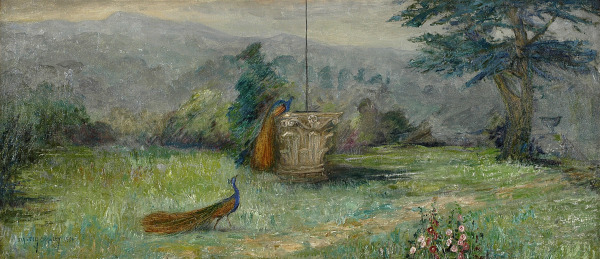
In 1980 a National Register of Historic Places nomination form described Ida Jolly Crawley as "an independent and dynamic woman who opened Asheville's first art museum." Over sixty years earlier, Crawley had purchased a twenty-five room mansion in an elite neighborhood in western North Carolina's major city which "is notable chiefly for the exuberant exterior and interior ornament of a character unequaled elsewhere in the city, combining Queen Anne, Eastlake, and Italianate decorative motifs." The eclectic style of the house was a good match with its owner who displayed a varied range of objects alongside her own paintings.
In most sources Crawley's birthplace is given as rural Pond Creek, Tennessee, but in her 1906 passport application she wrote Sweetwater, a larger community about six miles away. A diary entry records her departure from Knoxville, Tennessee for the 1893 World's Columbian Exposition in Chicago. She studied for five years at the Corcoran School of Art in Washington, DC, where many other southern artists also studied, including Adelia Lutz and Edgar Nye, but since the dates of Crawley's studies are unknown, it would be difficult to confirm whether she knew those artists. She found some success and won a gold medal at the 1910/1911 Appalachian Exposition in Knoxville, where Lutz, Clara Weaver Parrish, William Posey Silva, Catherine Wiley, and Ella Sophonisba Hergesheimer all exhibited.
Crawley's passport application in 1906 indicated that she was a resident of Washington and intended to be abroad for six years. An oil painting depicting the Niké of Samothrace sculpture is inscribed "Louvre, 1912." She is said to have studied in France as well as in Germany. While abroad she probably purchased items that found their way to her museum which was called the "Ida Jolly Crawley Museum of Art and Archaeology," or alternately the "House of Pan." On view starting in 1919 and lasting until her death were such things as antique furniture, Pompeian pottery and lava, Dead Sea water, botanical and geological specimens, along with her own paintings some of which were copies of old masters. These were displayed in sixteen rooms of the house and over the mantel was a sign that reflected Crawley's purpose and persona:
Welcome to the House of Pan.
Muse O'er its Trophies,
Its Owner
Its Art.
From Dove-Tower to Crypt
A Spirit You'll Find
A Personality of Heart.
Ida Crawley
Ida Crawley
Ida Crawley
Ida Crawley
Ida Crawley